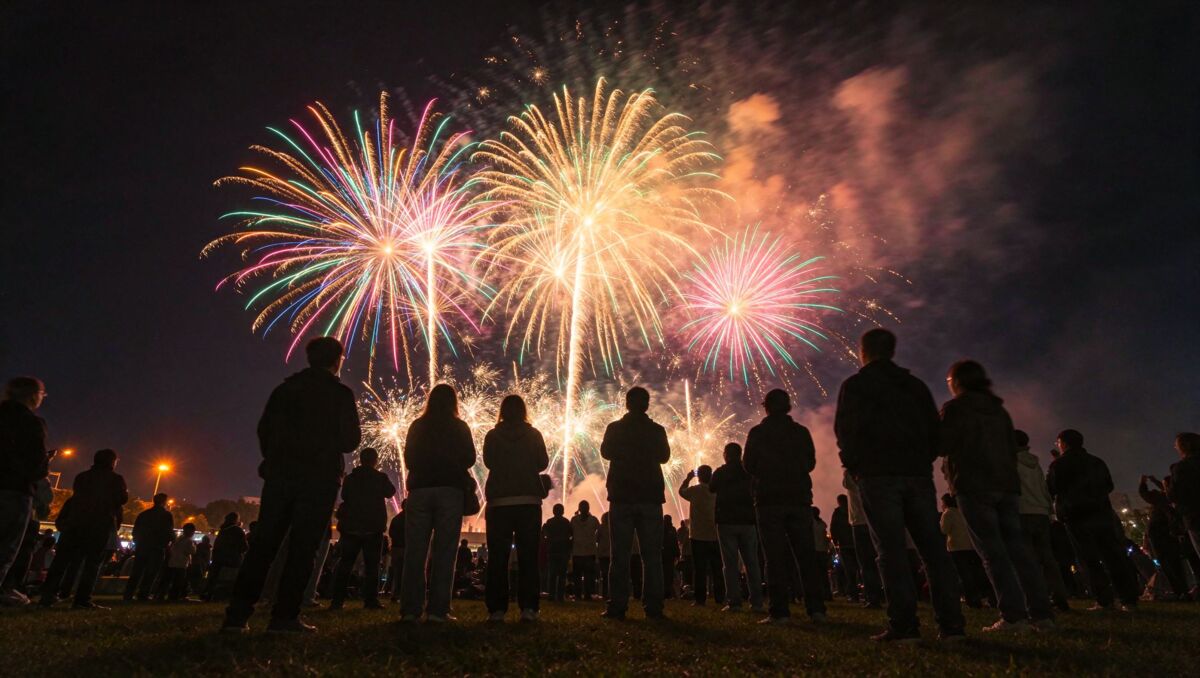
Planning a fireworks display? Know who covers which risks.
New Year’s Eve will look different this year. Since 1 August, the Dutch Safe New Year’s Celebrations Act has prohibited private individuals from setting off consumer display fireworks. Sparklers and other category F1 fireworks are still permitted, as are professional fireworks displays. Many local authorities, community organisations and event organisers are therefore considering a central display. And fireworks aren’t just for New Year’s Eve: they’re also popular at festivals, weddings, sporting events and commemorations. Around 1,700 events featuring fireworks take place in the Netherlands each year.
A fireworks display can be spectacular, but you are still working with explosives. If something goes wrong, you need to know exactly who is responsible and what is insured. Here’s how it works.
Who does what?
As the organiser, you don’t set off the fireworks yourself. That is the job of a professional fireworks company using certified pyrotechnicians. You remain responsible for the event around it, though. Agreeing who does what in advance makes sense: unclear responsibilities often cause the biggest headaches afterwards.
The fireworks company needs an operating permit from the Dutch Human Environment and Transport Inspectorate (ILT). For each display, it must also notify the provincial authority or apply for permission to fire, depending on the quantity of fireworks and the location. The application must include a firing list, details of the certified operators, a site plan and the company’s liability insurance policy number. A fireworks NOTAM must also be requested to keep aircraft and rescue helicopters clear of the display.
As the organiser, you arrange the event permit with the local authority and everything relating to the public: barriers, security, first aid, traffic management and communication with visitors and local residents. The fireworks company is responsible for insuring the fireworks and the risks involved in firing them. Agree this clearly in advance and put it in writing. Ask for a copy of its insurance policy too. Check that it is valid on the date of your display and that the level of cover is appropriate for its scale.
The risks in practice
Most displays run smoothly because professionals follow strict procedures. But fireworks can still be unpredictable, and some incidents happen more often than you might expect.
The main risk is injury to other people or damage to their property. An aerial shell that bursts too low or drifts in the wind could burn spectators or set fire to a thatched roof or marquee. Crowd panic is another real risk, particularly if everyone tries to move in the same direction at once. A safe separation distance and well-planned barriers can prevent a great deal of trouble.
The firing location matters too. Launching fireworks from a roof or boat requires extra precautions and increases the risk of damage to the location itself. After the display, unexploded fireworks may remain on site and could still go off later. The area must therefore be thoroughly checked before it is reopened.
Then there are the risks that have nothing to do with the fireworks themselves. Permission to fire arrives too late, the local authority withdraws the event permit, or nearby residents raise concerns about horses or livestock in surrounding fields. Addressing these issues early reduces the risk of your display being called off at the last minute.
What can you insure?
Event insurance consists of several sections of cover. For a fireworks display, the priority is making sure your policy and the fireworks company’s policy work together without leaving gaps.
- Liability
This section covers your liability as the organiser for injury or damage arising from your own responsibilities. For example, a visitor might be injured because the barriers are inadequate. Claims for injury or damage caused directly by the fireworks should, in the first instance, be handled under the fireworks company’s liability insurance. No Risk only insures displays carried out by a certified company with a valid operating permit and its own liability insurance. - Cancellation and extreme weather
This needs careful attention. Force 5 winds can be enough to cancel a display, but they do not qualify as extreme weather. If the rest of your event goes ahead, the cost of the cancelled fireworks display will therefore not be reimbursed. Agree with the fireworks company in advance what you will pay if wind prevents the display from going ahead.
If your entire event is cancelled because of a severe storm, for example, extreme weather cover may protect you against the financial loss. You must have added this cover at least 14 days before the event.
Cancellation because permission to fire or the event permit is refused or granted too late is not covered. As the organiser, you need to arrange these in good time. - Equipment
You can include hired equipment such as staging, lighting and sound systems. The fireworks themselves are not covered under this section: they belong to the fireworks company and remain its responsibility. - Personal accident
You can arrange personal accident cover for volunteers helping with the build or barriers. The fireworks company’s pyrotechnicians are not included in this cover.
As the organiser, you need to arrange cover for:
- Your liability for injury or damage arising from your own responsibilities, such as barriers and crowd management.
- Financial loss if your event is cancelled because of extreme weather.
The fireworks company is responsible for arranging its own insurance for:
- Injury or damage caused by the fireworks themselves, such as burns to spectators or a thatched roof catching fire.
- Its own equipment and fireworks, including during transport and storage.
Unsure whether the fireworks company’s policy works alongside yours? Send it over. We’ll be happy to take a look with you.
Why it pays to speak to No Risk early
We’re happy to help you plan your display, and we need a clear picture of what you have in mind. Send us the safety plan, site plan and copies of the fireworks company’s insurance policy and operating permit. We’ll then explain what we can cover, which conditions apply and what is excluded.
That way, you know where you stand well before the first firework goes up. And when the evening arrives, you can enjoy the show.