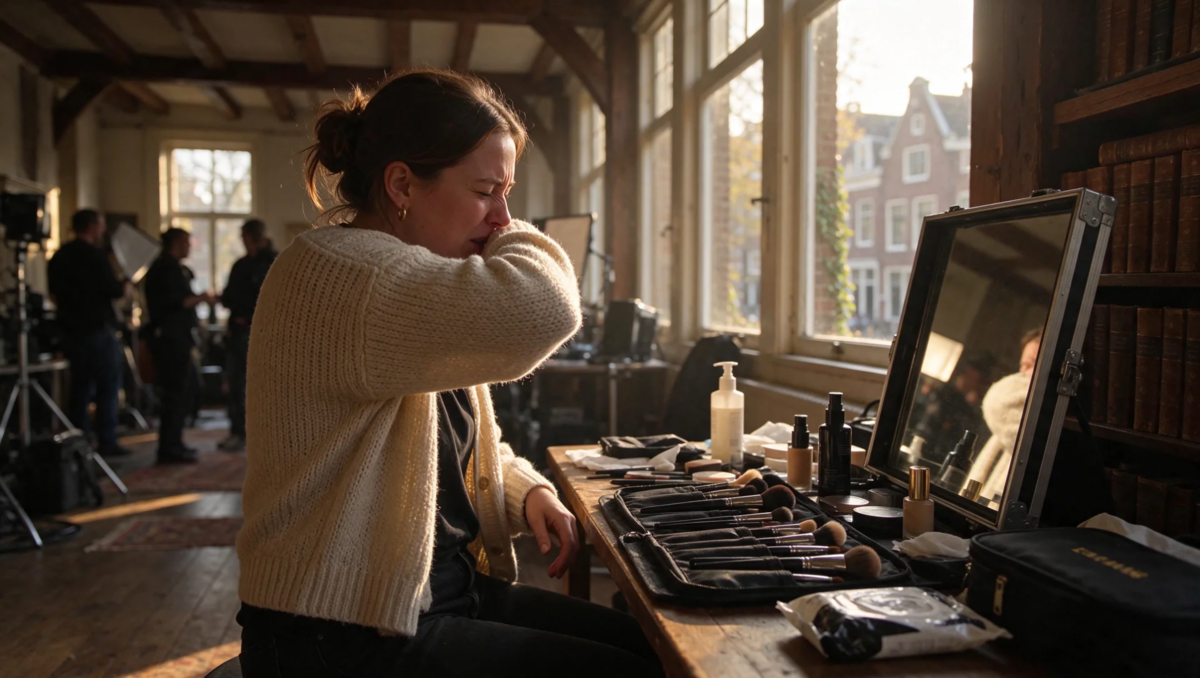
Flu season on set
Your shooting schedule is locked in. Your lead actor has just had her final costume fitting. Then one of your runners starts coughing. Two days later, your gaffer is laid up on the sofa and your lead calls to say she’s in bed with a fever of 39°C.
In the Netherlands, flu season generally runs from October to May, with cases usually peaking between December and March. That’s when plenty of productions are filming, with long days and dozens of people sharing the same rooms and vans.
One person off sick can bring a whole set to a standstill
A shooting day takes careful coordination. The crew, location, lighting and kit all need to come together at the right time. If one person drops out, everyone else can be left waiting while crew, equipment hire and location costs keep ticking up. You can often find a replacement crew member through your network. Finding a stand-in for your director or director of photography (DoP) is harder. And without your lead actor, some scenes simply have to wait.
Flu can spread quickly on set. One person off sick is a scheduling problem. Five at once is a budget problem.
How non-appearance insurance works
Cast and crew insurance, also known as non-appearance insurance, covers extra production costs if someone insured under the policy is unable to work due to illness or injury, or if they die. That can mean extra shooting days, changes to the schedule or, in the most serious cases, recasting a role.
Cover applies only to the people named on the policy. That’s usually your main cast, sometimes with key crew members such as the director. The insurer asks for medical information upfront, and an excess applies.
Since COVID-19, insurers have been looking more closely at this cover, and terms can vary considerably from one policy to another. Check before filming who’s covered, which costs you can claim and what conditions apply. If you’d like a hand going through the details, we’re happy to help.
How to keep disruption to a minimum
A bit of planning can save you a claim in the first place.
Build a buffer day into your winter schedule and keep a few scenes up your sleeve that you can shoot without your main cast. Make it clear from the start that anyone who’s ill should stay home. Keep a list of people you can call in to cover so nobody feels they’re letting the team down by calling in sick.
Small steps on set help too. Put hand sanitiser by the coffee machine, give everyone their own mug and keep shared spaces well ventilated. Set out what happens if someone falls ill in your freelancer contracts, so you can focus on the shoot when it happens.
Unsure whether the right people are named on your non-appearance policy? Want to know what your cover says about illness? Get in touch with No Risk. We’ll be happy to take a look with you.